Clarinet Barrels: Chadash vs. Moennig
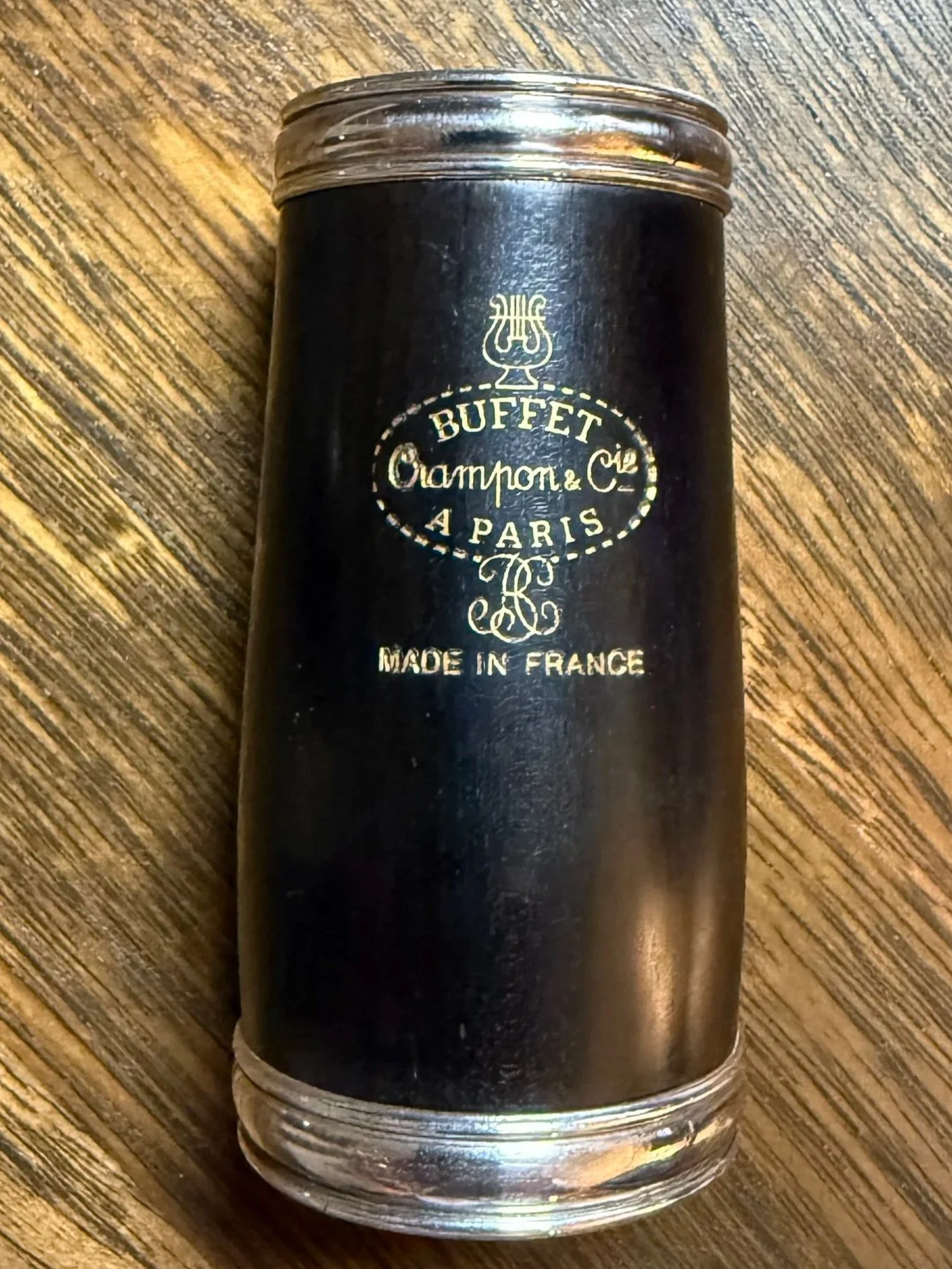
Having spent a large (admitedly too large) portion of my career experimenting with various types of equipment, I thought it would be pertinent to share some of my experiences and what they might do for you. Up first: the barrel.
I think out of all pieces of equipment outside of the mouthpiece, the barrel joint has the potential to make the biggest difference. The taper, length, material, shape, and rings can turn an unplayable mess into something that's workable and it can sadly also do the complete opposite. Rather than go through all of the barrels I have tried and their pros and cons, I think it’s best to start with what I would consider the two most common after market offerings, both from Buffet.
The Moennig barrel and Chadash barrel have been around for years. They are manufactured by Buffet using the bore measurements from Hans Moenning and Guy Chadash respectively. Both are what are called “reverse taper” which essentially means that the bore is wider at the mouthpiece end than it is at the upper joint end. Typically, stock barrels are either cylindrical (identical measurements at top and bottom) or conical (wider at the bottom than the top). A typical Chadash and Moennig B-flat barrel will measure something like .589” at the top and .580 at the bottom, while an A clarinet barrel will measure something like .585” to .576”. These specific measurements vary from barrel to barrel and also are dependent on length. Internally, however, the barrels differ. It is my understanding that the Moennig barrel has a much more aggressive taper (gets smaller faster) while the Chadash has a more gradual one. While the two barrels are similar in concept, they are very different in application
I currently perform on Buffet Tosca Clarinets, which I have played on for the majority of my professional career. From 2021-2025 I played on a set of Tradition clarinets. Many non-R13 players prefer to use the stock barrels. This is especially true I’ve found from my colleagues who use Buffet Festival clarinets. This is completely reasonable. After all, the instruments are reamed with the barrel and upper joint connected. I’ve spent large stretches of my career using the stock barrels and while I think generally they offer the best resonance, they often leave much to be desired in terms of pitch and response. Additionally, I’ve found that the stock barrels tend to sound a little brighter and more harsh, which makes it harder to blend with them in an ensemble setting. This is just my personal experience and your mileage may vary.
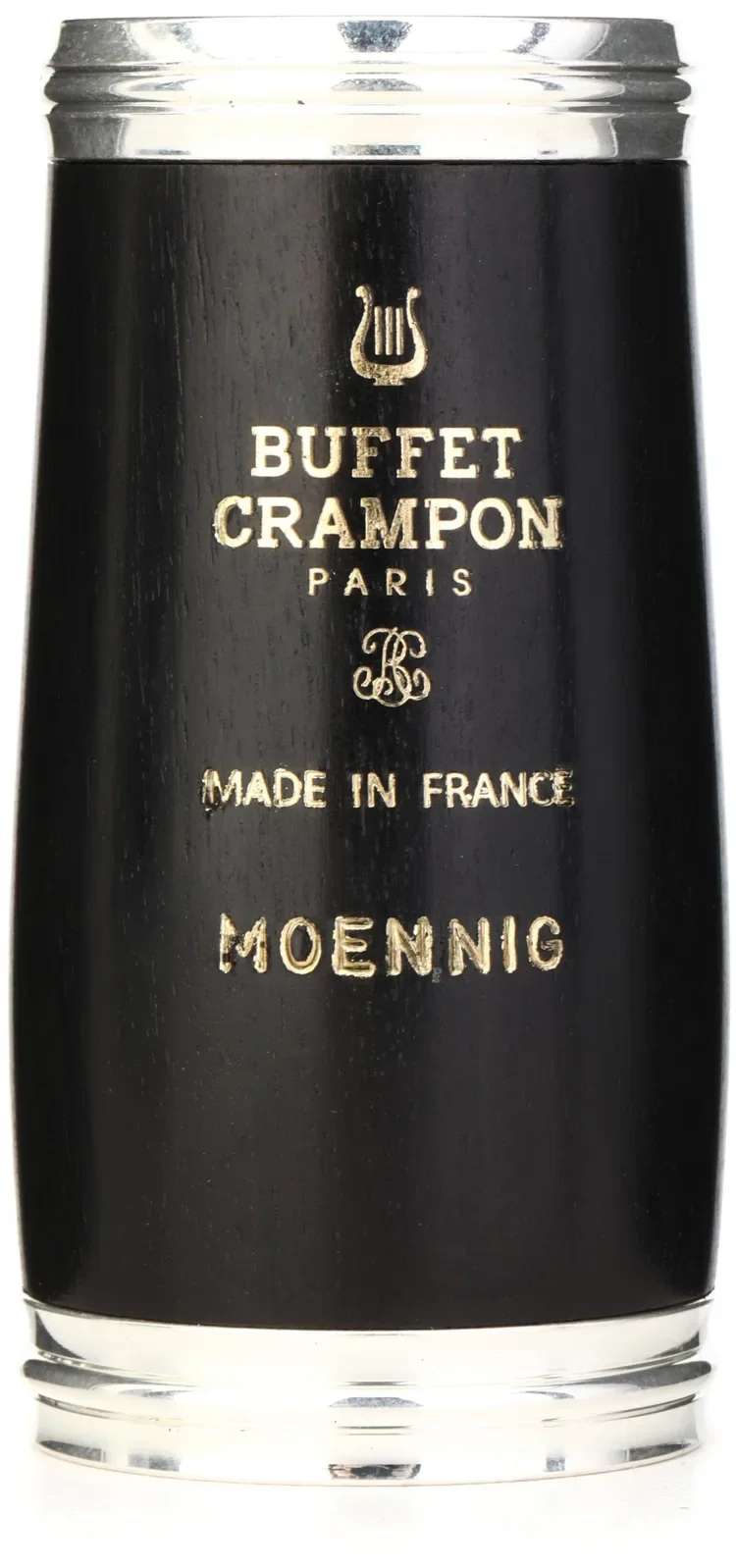
Moennig
The Moennig barrel offers a few things that are extremely captivating. The true benefit of the Moennig comes in the pitch correction. Most Moennig barrels I’ve found really correct the 12th relationship between the lower and upper partials. On most Buffet clarinets, the lower register is quite a bit flatter than the upper register which is often quite sharp. The Moennig barrel does an excellent job of improving this, especially on the D/A, E/B, and F/C 12ths (I actually find that the D/A is OVER corrected in some circumstances). Moenning also does an excellent job, in my opinion, of centering the sound, especially in the middle clarion register. This is especially noticeable on A clarinet where that register can really sound unfocused and wide. I find the Moennig barrel to be more focused and perhaps a little brighter in sound to the Chadash, at least on recordings. Whenever I play with a Moennig barrel, my physical reaction is to voice slightly higher in my throat which I think contributes to the slightly brighter and more focused color. It doesn’t allow you to relax into the sound as easily. Articulation is another place where the Moennig shines. The initial response is a little bit front loaded, but the tongue just seems to spring off of the reed. The throat tones are where I always caution people when using a reverse taper barrel. Often times the throat G# and especially the throat A are screaming sharp and can feel very unstable or wild. You will probably need to cover more with resonance fingerings than with a stock offering.
Chadash
The Chadash barrel is another fantastic offering. While it does narrow the 12ths, it doesn’t do it quite as extremely as the Moennig does. Unlike the Moennig, the Chadash tends to spread the sound a little more in the middle register and it feels less locked in. Sometimes it almost feels like you are falling through the sound a bit, especially in that middle clarion. I find that the Chadash has a much more even, darker sound but with a slight high partial that glows over the sound. The initial response on the Chadash is easier than the Moennig, but there is more back end resistance in the sound. Articulation doesn’t have the same “pop” as it does with the Moennig, but it is still improved from a stock offering. The throat tones on Chadash’s I find are less problematic than the Moennig, but the throat A still lands quite sharp. I’ve also found that in general, the Chadash barrels are lower pitched than the Moennig and in fact, they worked best when pulled out .5mm-1mm. When using Chadash barrels I've often using 1mm shorter than I would in a Moennig or stock counterpart. For example, if a 67mm Moennig works best, it’s likely that I will have to use a 66mm Chadash pulled out slightly to get the pitch to match.
Which One Should You Choose?
I’ve used both extensively in my professional career, but it really depends heavily on your clarinets and other setup choicdes. If you have rather wide 12ths, I’d recommend starting with the Moenning because, in my opinion, pitch is more important than anything when choosing equipment. However, if the pitch is relatively good with a stock barrel, I do prefer the sound and evenness of the Chadash. I found that when I was using my Tradition clarinets, they matched very well with a Chadash barrel. It softened up the hyper focus of the Tradition and balanced them out quite nicely. Conversely, most R13 or R13 adjacent (Prestige, Tosca) players I know use Moennigs. I am currently using Chadash barrels on my Buffet Toscas, but the Ringless version. I find these to be even more improved than the buffet offering and love the balance it provides for my current instruments. They are also not nearly as low as the ringed version, so I’m able to use a slightly longer 67mm on Bflat and 66mm on A. Huge shoutout to Mr. Chadash who has been making barrels for me for many years!
I hope that this article was helpful and gives you a slightly better idea of what to look for when shopping for a clarinet barrel. I think these two are a great place to start and you will see an immediate improvement in sound, response, and intonation.