Buffet Clarinet Models Explained: What’s the Difference Between R13, Festival, Prestige,Tradition, Legende & Tosca?
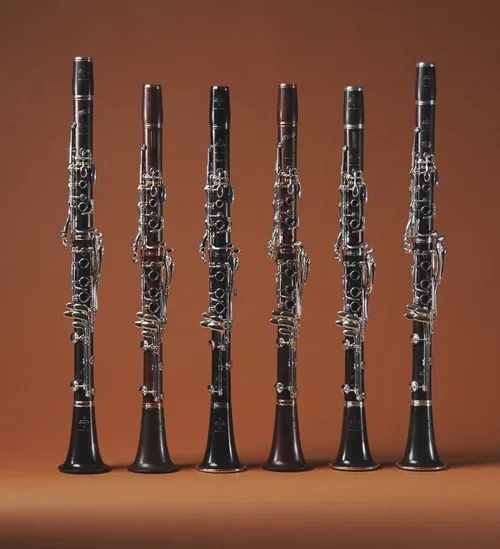
As a foreword to this article, I am going to give a large amount of credit to Lisa Canning from Lisa’s Clarinet Shop. She wrote a terrific set of articles that I reference often when thinking about clarinets and what might be a good direction for me or my students. Lisa has years of experience hand selecting clarinets and has played many thousands of instruments, so I highly recommend you check these articles out!
For this article, I am only going to focus on Buffet clarinets, because that’s what I am most familiar with. I will not be addressing the Divine, BC XXII, RC or RC Prestige models as I have not spent enough time on these to form a coherent opinion. As a caveat, I’ve heard many great players over my time, and often times people who I enjoy play on completely different equipment than myself. Everyone’s mouth, cavity, air, throat, lungs etc. are different and it creates different sensations. This is of course not to mention the fact that people have different preferences when it comes to sound!
This is a brief overview of each model from my time playing or testing them.
R13
I would consider the R13 the “flagship” model for Buffet Crampon and it has been for many years. I find the R13 to have a beautifully ringing sound with that extremely focused center. Most R13 players I know have to work to widen the sound because it focuses so incredibly well. R13s come in both silver plated and nickel plated keys. Before anyone comes at me (don’t @ me bro) the plating DOES make a difference. I find the Nickel to be a bit smoother and rounded sounding whereas the silver plated keys have more of a brilliance in the sound. One downside to the R13 is that you often have to try a large batch of R13s in order to find one that really sings. They are incredibly inconsistent in terms of intonation and quality. Often times the R13s have more of the “outside” cut of wood which is more porous and grainy, because they reserve the nicer wood for the more premium models. Think of it like the difference between Blue Box and V12 reeds, where the more “center” cut doesn’t have as big of grain lines, thus higher quality.
Festival
The festival is an extremely popular model played by many clarinetist in professional orchestra. Off of the top of my head, a non-exhaustive list of players include Afendi Yusuf (Cleveland Orchestra), Ralph Skiano (Detroit Symphony Orchestra), Taylor Marino (Charlotte Symphony Orchestra), and my wonderful colleague Julianna Darby (Indianapolis Symphony Orchestra). With the Festival clarinet, Buffet spend a lot of time focusing on solving some of the intonation issues, especially with the A clarinet in the form of a different register tube placement. From a playing perspective, I find the Festival to have more of an outline and brilliance in the sound compared to the more focused and centered sound of the R13. Consequently, the player may have to choose a different barrel, mouthpiece, or reed to help bring more center to the sound on the Festival.
R13 Prestige
The R13 prestige is a more premium version of the R13 and shares many of the same sonic qualities. Some practical improvements include the addition of a left hand E-flat key (which is honestly something I can no longer live without) and a more “center cut” wood. I really enjoy the R13 Prestige and if it weren’t for the Tosca, I think this is the model I would play on. In comparison to the R13, the prestige has a bigger, darker sound but still maintains that nice core and resonance that the R13 is known for. I feel like the Prestige fills out the overtone series better than the standard R13. Because of this, I find them to be slightly more resistant than a standard R13. Consequently, a popular combination for many clarinetists is to use a Prestige B-Flat and a R13 A in order to match resistance and sound color, since the A clarinet is inherently more resistant!
Tradition
The Tradition clarinet is the first on this list that is more of a deviation from the standard R13 line. The tradition features a larger, cylindrical bore. I find that it is very easy to get a nice sound on the Tradition clarinet but it is not as flexible or tightly focused as the previously discussed R13, Festival, or Prestige. The Tradition comes with a left hand E-flat and a low F correction mechanism, and is the only clarinet other than the regular R13 that comes in either Nickel or Silver plated. I played on the tradition for about 4 years. There were things I liked about it and others that I didn’t. I felt like in general, the sound was a little on the “saggy” side for me, and some of the intonation quirks, especially in the altissimo were difficult to manage. I also found that the Tradition played quite a bit lower than most other clarinets, so be prepared to use some shorter barrels depending on your mouthpiece.
Legende
The Legende is the souped up version of the Tradition. This instrument features rose gold plated posts (again, this DOES make a difference) as well as greenline tone holes to help protect against catastrophic cracking. It also has a left hand E-flat, Low F correction, rose gold rings, and a bell that does not have a lower ring. The keywork is also slightly different (more rounded) and ergonomic than the Tradition (more akin to the Tosca). I find that the Legende has a bit more color, brilliance, and personality than the Tradition, but the sound isn’t for everyone. I’ve played some beautiful Legendes and it is amongst the most popular models for European clarinetists.
Tosca
The Tosca is my preferred model and is what I have played for the majority of my professional career. I find the Tosca to have a much darker, richer, and more complex sound than many of the other models, as well as being incredibly even throughout all registers. I have to work to add center to the sound which is the opposite of most Buffet clarinets. Technically, the Tosca has tone holes that are in slightly different positions and keywork that I find very comfortable for the hands. Perhaps my favorite thing about the Tosca is ironically many peoples’ complaint with this model. I find that the instrument has a certain “margin for error”. What I mean by this is that it’s flexible enough to create different colors, but the legato, intonation, and articulation allows me to not have to be incredibly precise with my embouchure, air, or tongue. In fact, one of the problems I have when going to other models is that I find them TOO flexible because I’m used to that cushion the Tosca provides (I need all the help I can get 😆). I think the biggest downside to the Tosca is that it is VERY expensive. Additionally, I do think that an after market barrel is a necessity for the Tosca. The stock barrels are pretty stuck and you can’t get the full evenness of the instrument without something like a Chadash barrel. The other thing I don’t care for on the instrument is that the low E and F are notoriously very flat. Playing forte in that register is downright embarrassing sometimes and something I have to manage in orchestra and chamber music.
Recap
I hope this gives everyone a good overview of the different Buffet Crampon models of clarinets. Obviously there are a ton of different brands, models and things to consider when choosing a clarinet. When choosing a clarinet I find that following this advice in Harry Potter has given me the best results:
“The wand chooses the wizard, Mr. Potter. It's not always clear why. But I think it is clear that we can expect great things from you." - Mr. Ollivander